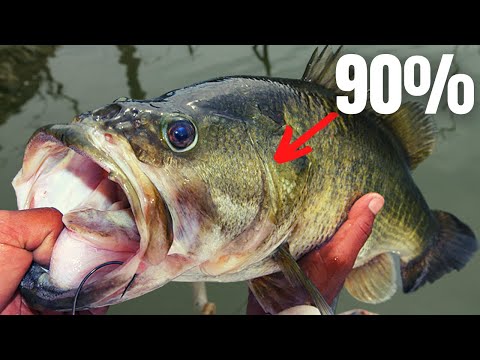
Bass fishing is one of the greatest sports in all of the world. The thrill of catching a bass, no matter the species, simply can’t be matched. While there is a lot that goes into bass fishing, I think I can tell you about 90% in 15 minutes!
SUPPORT MY FISHING APPAREL COMPANY:
Sun Shirts –
Bass Hats –
Fishing Gloves –
T-Shirts –
SUPPORT MY PARTNERS:
OMNIA TACKLE –
CLEMONS BOATS – (419) 357-7042 (Tell Them BassFishingHQ Sent You!)
BOAT THINGS – (614) 895-2628 (Tell Them BassFishingHQ Sent You!)
MILLERTECH LITHIUM BATTERIES
Trolling Motor Battery –
Cranking/Electronics Battery –
HUMMINBIRD –
MINN KOTA-
PREMIUM PRO APP –
ARK RODS –
WATERLANDCO –
INSTAGRAM – Ty_Berger
Largemouth bass, also known as largies and bucket mouths, can be further categorized into Northern Largemouth, Florida Largemouth, and H1 Hybrids—-the mix of the two sub species produces the biggest largemouth in the world, which happens to be over 22lbs, shared by two anglers in Georgia and CHINA.
The largemouth is probably the most widespread among the bass species, found in neighborhood ponds, natural lakes, rivers, creeks, reservoirs, all 50 states, and literally around the globe!
Largemouth bass can be identified by their color and markings, BUT the most identifiable trait is its mouth. When its mouth is closed, the jaw will extend past the eyeball, hints the name LARGE MOUTH.
Smallmouth bass, also known as smallies and footballs, tend to be more curious and aggressive than largemouth and are known as being the hardest fighting of the bass species, sometimes jumping 5ft in the air and literally NEVER giving up.
While they may be more aggressive than largemouth, they don’t grow as big, with the World Record coming in at 11lbs 15oz. There are also sub species of smallmouth bass which include northern smallmouth and southern smallmouth.
Smallmouth can be found in different bodies of water, but they tend to thrive in creeks, natural lakes in the North, and clear water reservoirs. They can be identified by their brown color, vertical bars, and when their mouth is closed, the jaw will NOT extend past the eyeball, obviously why it is named smallmouth.
Spotted bass, also known as Spots and Kentucky bass, also have many subspecies including Kentucky spotted bass and Alabama Spotted Bass.
Spots can thrive in very clear water reservoirs, as well as heavily stained river systems. The biggest smallmouth ever caught was 11lbs 4oz.
Although they look similar to a largemouth bass in color, Spots tend to have an extremely dark and blotchy lateral line, with dark spots occurring just above and just below. Their jaw will not extend past the eyeball, and there is a very recognizable rough patch on their tongue that feels like sandpaper.
While these three species are the most targeted bass, it should also be known that there are other bass species like Shoal bass and Meanmouth which is a cross between bass species.
Interestingly enough all of these bass species actually fall under the SUNFISH Family, while fish species like striped bass and white bass fall under the BASS Family.
In order to catch largemouth, smallmouth or spotted bass you might think that lure selection is the most important element? While this is very important and we will discuss it shortly, the most IMPORTANT element of bass fishing is knowing WHERE bass are located!
There are two categories of lures, horizontal lures and vertical lures. Horizontal lures are meant to be worked horizontally in the water column, these are lures like, chatterbaits, spinnerbaits, jerkbaits, crankbaits, etc.
Vertical lures are baits that you cast out and let sink vertically to the bottom, where then they can be worked across the bottom, like texas rigs, jigs, ned rigs, shaky heads, etc.
BassFishingHQ is dedicated to teaching people how to catch more and bigger bass. I will go over different bass fishing tips & techniques that will put more fish in the boat or on the shore. Whether you are just starting out or a seasoned tournament angler, my goal is to help you catch more bass.
DISCLAIMER: Links included in this description might be affiliate links. If you purchase a product or service with the links that I provide I may receive a small commission. There is no additional charge to you! Thank you for supporting my channel so I can continue to provide you with free content each week!
now I know why there are so much bass right off my dock.
Week before memorial day, I was getting blown up on a local lake. I was throwing a stick bait and a chatterbait past bluegill, and pulling them slowly through the schools. Highly pressured lake that produces 10″-14″ bass, I hammered five bass from 15″ up to a monster 18″ bass. Plus one that broke off on his second thrash, taking my worm and dinger with him. I eyeballed him 20″-24″ from the bank. All in less than two hours.
The Thursday after memorial day, I couldn’t find baitfish. No minnow. No bluegill. I couldn’t find the bass, either. I finally started targeting the weeds themselves, just slowly dragging a dinger through. I noticed a little bluegill follow the chartreuse tail of my dinger out. Bingo.
I was able to get one strike, and he threw the hook. Probably in the 12″ length.
But once I figured out where exactly the bluegill were hiding, I hooked a bass.
11:02 I caught a 3 pound bass next to an Eddie
save 15min: dark blue texas rig senko worm
this was so clear and straightforward, my son and I are headed back to the Adirondacks in a couple weeks for our 2nd summer, last summer we caught dozens of small bass (<1 lb).
this will help us bag some big uns!